Thai astrology enters academia with bachelor’s degree programme
Rajapark Institute launches university-level programme after three-decade push, aiming to establish professional standards and ethical practice in the AI era
Thai astrology, a body of knowledge traditionally passed down from master to student for generations, is entering a new chapter as Rajapark Institute introduces a bachelor’s degree programme aimed at bringing the discipline into a formal academic framework.
The Faculty of Liberal Arts at Rajapark Institute has launched a Bachelor of Arts programme in Prediction and Astrology, marking a significant step towards establishing academic and professional standards for a field that has long played a role in Thai society.
The programme aims not simply to train a new generation of astrologers, but to produce graduates equipped with academic knowledge, analytical skills, ethics and an understanding of human behaviour, while preparing them to apply the discipline responsibly in a world increasingly shaped by artificial intelligence.
Astrology has been part of Thai society since ancient times, traditionally used to determine auspicious dates, inform city planning and royal ceremonies, and assist people in making decisions and planning their lives.
Despite its long history, however, much of the knowledge has traditionally been transmitted through teachers, texts and practical experience rather than within a standardised academic system.
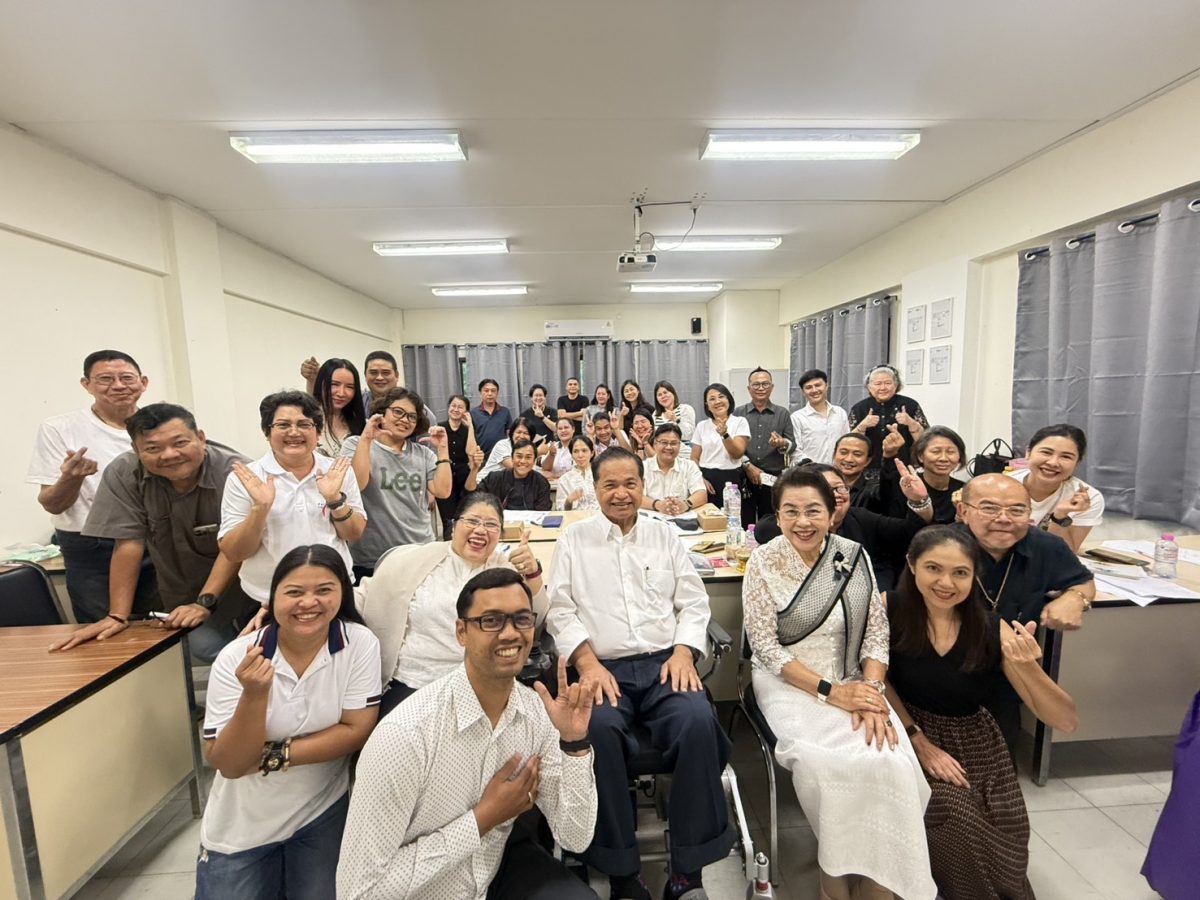
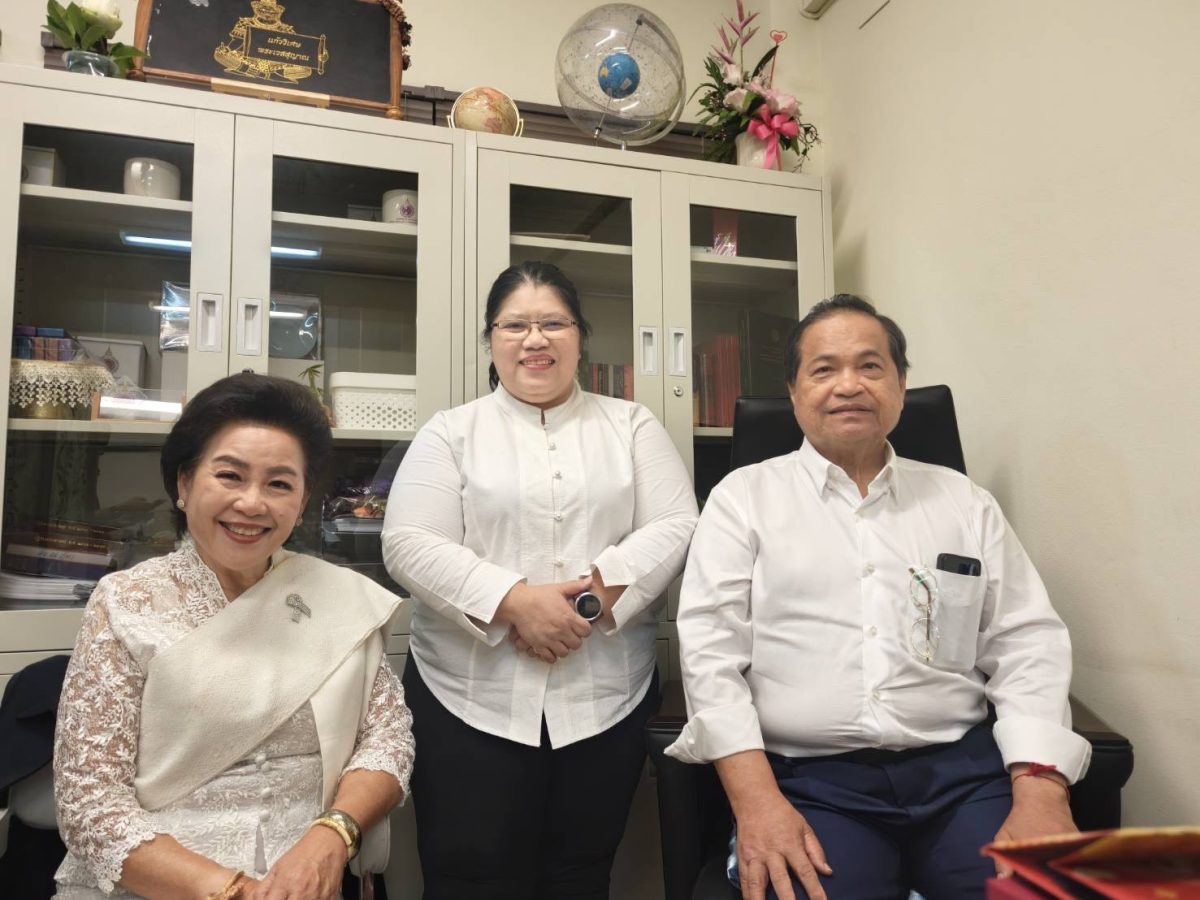
The new programme is the result of cooperation between the International Astrology Association, led by Dr. Pinyo Pongcharoen, and Rajapark Institute, with Asst. Prof. Dr. Thanapon Sarunburana playing a key role in advancing the initiative.
Dr. Pinyo said the establishment of the degree programme followed more than 30 years of efforts to bring astrology into formal education.
Over the decades, discussions were held with academics, legal experts and other stakeholders on how the discipline could be incorporated into an educational framework. What was once regarded by many as an unlikely prospect became increasingly viable as society changed, demand from learners grew and higher education institutions became more open to different fields of knowledge.
The next objective, Dr. Pinyo said, is to develop recognised professional standards for astrology, including a code of ethics, certification mechanisms and an appropriate professional body.
The ultimate measure of the programme’s success, he added, would not be whether it produced astrologers capable of making the most accurate predictions, but whether its graduates were knowledgeable, ethical and capable of serving society responsibly.
“Many people assume that the purpose of the programme is to produce a new generation of astrologers or successors to the profession, but that is only part of it,” Dr. Pinyo said.
“This is not about producing fortune-tellers. It is about establishing standards for the discipline. The programme represents an effort to raise Thai astrology to a recognised professional and academic standard.”
He noted that established professions such as medicine, engineering, law and teaching operate within defined educational systems, academic standards and professional oversight.
Astrology and other predictive disciplines, despite their longstanding presence in Thai society, have lacked comparable common standards, he said.
Without systematic development, the field would continue to rely largely on individual practices, without common professional standards, accreditation or oversight.
Introducing astrology at university level would allow the discipline to be studied, researched and developed more systematically, he said.
More than predicting the future
Students enrolling in the programme will not necessarily be expected to become professional astrologers.
According to those behind the curriculum, astrology can be approached as both a discipline and an art that can be applied to everyday life. Students may use the knowledge to better understand themselves and others, assess circumstances surrounding decisions and apply such insights to their careers, organisational management or business.
The programme therefore seeks to position astrology not simply as a means of predicting future events, but as one potential tool for understanding people and improving decision-making and quality of life.
Dr. Patcharee Kaewphaleuk, who is responsible for the programme, said the Bachelor of Arts in Prediction and Astrology was designed in accordance with higher education standards and incorporates defined programme learning outcomes, or PLOs.
Students are required to complete at least 121 credits, covering general education, specialised subjects and electives.
Alongside predictive disciplines, students will study psychology, sociology, law, statistics, information technology, research, communication and entrepreneurship.
Specialised subjects include Thai, Western, Chinese and Indian astrology, as well as numerology, physiognomy, feng shui and other systems of prediction, allowing students to integrate knowledge from different traditions and academic disciplines.
“The key is to enable students to understand people and society and to integrate knowledge from different fields,” Dr. Patcharee said.
“In this sense, astrology is a discipline for navigating life, rather than simply a means of predicting the future.”
AI seen as a tool, not a rival
The arrival of artificial intelligence has also raised questions over whether technology could eventually replace astrologers.
Asst. Prof. Dr. Kritikavalai Hirunsi, director of the Thai-International Astrology Institute, said AI should not be viewed as a competitor, but rather as a tool that students should learn to use effectively.
AI can rapidly process large volumes of information, apply analytical rules and perform astrological calculations, she said. What it cannot fully replicate is an understanding of human emotions, psychological states and the complex circumstances surrounding an individual’s life.
Effective astrological consultation, she said, involves more than a person’s date and time of birth. It also requires psychology, experience, empathy and communication between the adviser and the person seeking guidance.
AI may be able to perform calculations, she said, but it does not possess the human sensitivity required for such interactions.
For that reason, the programme places emphasis on psychology, counselling and ethics alongside the study of predictive systems.
Ancient knowledge in a changing world
Bringing astrology into higher education does not mean abandoning its traditional roots, those behind the programme say. Rather, the aim is to place longstanding knowledge within a framework suited to a changing world.
The curriculum is therefore intended to develop graduates who possess not only knowledge of astrology but also analytical thinking, psychological understanding, communication skills, leadership and ethics.
Dr. Pinyo said people seeking to become a source of guidance for others must first possess the knowledge, capability and personal responsibility to manage their own lives.
Graduates should be able to stand on their own before applying their knowledge to help others, he said, which is why the curriculum places strong emphasis on morality, ethics, responsibility and leadership alongside academic study.
“Ultimately, bringing Thai astrology into higher education is not simply about gaining academic recognition for the discipline,” Dr. Pinyo said.
“It is about developing people who can use their knowledge responsibly to support others, while enabling the profession to stand alongside other disciplines with dignity, professional standards and ethics.”